 EN
EN

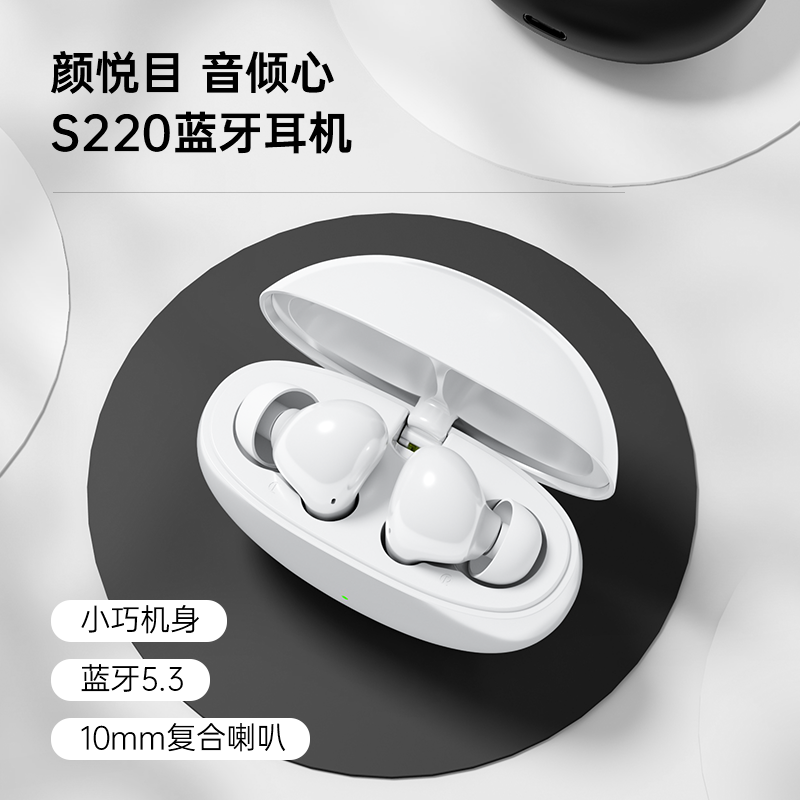
For runners who demand both performance and stability from their audio gear, the question of whether earbuds with ear hooks can truly withstand the relentless motion of intense running sessions remains paramount. The mechanical forces generated during high-impact running—rapid head movements, perspiration, and continuous vertical displacement—challenge even the most sophisticated earbud designs. Understanding how ear hook technology addresses these specific biomechanical challenges provides essential insight for athletes seeking reliable audio solutions that won't compromise their training intensity or require constant readjustment mid-stride.

The engineering principles behind earbuds with ear hooks extend beyond simple retention mechanisms, incorporating anatomical fit optimization, material science innovations, and weight distribution strategies specifically calibrated for dynamic athletic movement. When runners transition from casual jogging to interval sprints or tackle incline training, the accelerative forces acting on loosely fitted earbuds can easily exceed five times gravitational pull. This reality necessitates a comprehensive examination of how ear hook designs counteract displacement forces while maintaining comfort throughout extended running sessions that may span anywhere from thirty minutes to several hours.
Biomechanical Forces Acting on Earbuds During Running
Understanding Inertial Displacement Challenges
During intense running activities, earbuds experience complex multi-directional forces that conventional in-ear designs struggle to counteract effectively. The vertical oscillation pattern characteristic of running generates repetitive upward and downward momentum that can gradually work standard earbuds loose from the ear canal. Research in sports biomechanics demonstrates that average vertical displacement during running ranges between six to eight centimeters per stride, creating continuous micro-adjustments in the relationship between the earbud housing and the concha cavity. These repetitive displacement cycles accumulate over thousands of strides during a single run, explaining why friction-only retention methods prove insufficient for serious runners.
The horizontal oscillation component introduces additional complexity, particularly during directional changes or uneven terrain navigation. As runners pivot or adjust their gait to accommodate surface variations, lateral acceleration forces can reach magnitudes that exceed the static friction coefficient between silicone ear tips and the ear canal walls. Earbuds with ear hooks address this challenge through a dual-anchor approach, distributing retention responsibility between the ear canal seal and the external hook structure that engages the antihelix and superior crus anatomical features. This biomechanical redundancy ensures that even if one retention point experiences momentary loosening, the secondary anchor maintains overall positional stability.
Perspiration Impact on Retention Dynamics
Moisture accumulation during intense cardiovascular exercise fundamentally alters the friction characteristics between earbuds and skin contact surfaces. Sweat introduces a lubricating layer that can reduce effective grip by up to forty percent compared to dry conditions, creating a progressive degradation in retention performance as workout intensity increases. Traditional earbuds relying exclusively on ear canal friction face exponential failure probability once perspiration saturates the contact interface. The ear hook architecture employed in specialized running earbuds circumvents this vulnerability by establishing mechanical retention through form-fitting around cartilaginous structures rather than depending solely on friction-based grip.
Advanced designs incorporating hydrophobic coatings on ear hook surfaces further enhance wet-condition performance by preventing moisture accumulation at critical contact points. The material selection for ear hooks prioritizes compounds that maintain consistent coefficient of friction across both dry and saturated states, ensuring predictable retention performance regardless of perspiration levels. Silicone formulations with specific shore hardness ratings between forty and sixty durometer provide optimal balance between grip maintenance under wet conditions and wearing comfort during extended use. These material science considerations directly influence whether earbuds with ear hooks can genuinely withstand the moisture challenges inherent in high-intensity running environments.
Anatomical Engineering Principles of Ear Hook Design
Structural Integration with Ear Cartilage Geometry
The effectiveness of earbuds with ear hooks fundamentally depends on how precisely the hook contour matches the three-dimensional geometry of the human auricle, particularly the helix, antihelix, and triangular fossa regions. Anthropometric studies reveal significant individual variation in ear morphology, with antihelix prominence ranging across populations by as much as seven millimeters and helix curvature radius varying between twelve and twenty-two millimeters. Premium ear hook designs accommodate this anatomical diversity through adjustable tension mechanisms or memory-retention materials that conform to individual ear topography during initial wearing periods.
The optimal ear hook pathway follows a trajectory that engages multiple cartilage anchor points simultaneously, distributing mechanical load across a broader anatomical surface area rather than concentrating pressure at single contact locations. This distributed load architecture reduces localized pressure concentration that could otherwise cause discomfort during extended wear or create pressure points that become painful after sixty to ninety minutes of continuous use. Engineering analysis demonstrates that hooks engaging at least three distinct cartilage features—typically the superior helix curve, antihelix ridge, and concha wall—achieve retention force coefficients sufficient to resist the displacement forces generated during sprint-intensity running while maintaining pressure levels below the fifteen kilopascal threshold associated with discomfort onset.
Material Flexibility and Recovery Characteristics
The material composition of ear hooks determines both immediate fit quality and long-term retention reliability, with memory-grade silicone and thermoplastic elastomers representing the dominant material classes in performance-oriented designs. Medical-grade silicone formulations offer exceptional biocompatibility and maintain consistent mechanical properties across temperature ranges from negative ten to positive fifty degrees Celsius, ensuring stable performance whether running in winter cold or summer heat. The elastic modulus of these materials typically ranges between one and five megapascals, providing sufficient flexibility for comfortable conformance while generating adequate restoring force to maintain hook engagement with ear structures during dynamic movement.
Fatigue resistance becomes critical for earbuds with ear hooks intended for daily training use, as repeated flexion cycles during donning and removal can degrade material properties over time. Quality ear hook materials demonstrate minimal permanent deformation after ten thousand flex cycles, maintaining retention force within fifteen percent of initial specifications throughout a product lifespan spanning twelve to eighteen months of regular athletic use. The incorporation of reinforcing elements such as titanium wire cores or fiber-composite inserts enhances structural integrity without compromising the surface compliance necessary for comfortable skin contact. These engineering considerations directly determine whether ear hook equipped earbuds can sustain performance standards throughout the product lifetime rather than experiencing progressive retention degradation that eventually leads to failure during intense running activities.
Retention Performance Under Various Running Intensities
Steady-State Distance Running Conditions
During moderate-intensity steady-state running at conversational pace, the mechanical challenges facing earbuds with ear hooks remain relatively manageable, with vertical acceleration forces typically ranging between one point two and one point eight times gravitational acceleration. At these intensity levels, even moderately designed ear hooks provide adequate retention for most users, as the repetitive motion pattern remains consistent and predictable. However, duration becomes the critical variable, as runs extending beyond sixty minutes introduce cumulative factors including progressive ear canal shape changes due to temperature elevation, gradual loosening of ear tip seal integrity, and potential ear hook position migration caused by micro-adjustments in response to subtle discomfort.
The biomechanical stability advantage of earbuds with ear hooks becomes measurable even at moderate intensities when considering head rotation movements associated with traffic awareness, running partner interaction, or environmental scanning. These non-linear head movements introduce torsional forces that purely in-canal retention methods struggle to counteract, whereas properly designed ear hooks maintain earbud orientation through mechanical coupling with the relatively fixed position of auricular cartilage structures. Field testing data indicates that ear hook designs reduce earbud displacement incidents during moderate-intensity runs by approximately sixty-five percent compared to conventional truly wireless earbuds lacking secondary retention features.
High-Intensity Interval and Sprint Performance
The true test of whether earbuds with ear hooks can survive intense running manifests during high-intensity interval training and maximum-effort sprint sessions, where peak vertical ground reaction forces can reach three to four times body weight and translate into correspondingly elevated accelerations at the head and ear level. During these explosive efforts, inadequately designed retention systems experience catastrophic failure within seconds, as the rapid acceleration-deceleration cycles overwhelm friction-based retention mechanisms. Quality ear hook architectures demonstrate their engineering superiority under these demanding conditions, maintaining secure positioning through mechanical interlock that remains effective even when perspiration has completely saturated the ear canal interface.
Sprint interval sessions introduce additional complexity through the dramatic physiological transitions between maximum effort and recovery periods, causing rapid changes in perspiration rate, respiratory pattern, and head position as runners alternate between aggressive forward lean during acceleration phases and more upright recovery postures. These dynamic transitions challenge earbud retention systems with constantly varying force vectors and contact surface conditions. Advanced ear hook designs incorporate progressive engagement characteristics where increased displacement force automatically generates proportionally greater restoring force through geometric leverage effects, creating a self-stabilizing retention mechanism that becomes more effective precisely when mechanical challenges intensify. This performance characteristic represents the fundamental reason why specialized earbuds with ear hooks have become the preferred choice among competitive runners and serious training athletes.
Design Optimization Factors for Running-Specific Applications
Weight Distribution and Center of Gravity Positioning
The mass properties of earbuds with ear hooks significantly influence retention performance during running, with total earbud weight and center of gravity location serving as critical design parameters. Each additional gram of earbud mass generates proportionally greater inertial forces during the acceleration-deceleration cycles characteristic of running gait, increasing the mechanical load that retention systems must counteract. Optimal designs maintain individual earbud mass below six grams while positioning the center of gravity as close as possible to the primary ear canal anchor point, minimizing the moment arm through which inertial forces act to produce rotational displacement.
Battery placement represents a key consideration in achieving favorable mass distribution, as lithium cells typically constitute thirty to forty percent of total earbud weight. Designs that position battery mass forward within the ear canal housing rather than in rear-mounted control modules reduce the cantilever effect that amplifies displacement tendencies during vertical oscillation. The ear hook structure itself should contribute minimal mass while providing maximum mechanical advantage, typically achieved through hollow-core or thin-wall construction using high-strength polymers. Engineering analysis demonstrates that reducing earbud mass from eight grams to five grams can decrease retention force requirements by approximately twenty-five percent, substantially improving the margin of safety against displacement during intense running activities.
Acoustic Seal Integrity During Dynamic Movement
Beyond pure retention, earbuds with ear hooks must maintain consistent acoustic seal quality throughout the full range of motion and facial expressions encountered during running activities. Jaw movement during breathing, facial muscle contractions, and the subtle ear canal shape changes caused by these movements can compromise the acoustic seal of conventional earbuds, resulting in bass frequency attenuation and increased susceptibility to wind noise intrusion. The stabilizing influence of properly designed ear hooks counteracts these seal degradation mechanisms by maintaining consistent insertion depth and angular orientation regardless of peripheral tissue movements.
The relationship between mechanical stability and acoustic performance becomes particularly evident during high-ventilation running when mouth breathing and associated jaw positioning changes would otherwise create continuous variations in ear canal geometry. Earbuds with ear hooks maintain more stable acoustic coupling by isolating the ear tip seal from the mechanical perturbations transmitted through surrounding tissues, essentially decoupling the acoustic interface from the biomechanical environment. This stability advantage translates to more consistent audio quality throughout running sessions, eliminating the need for mid-run adjustments that disrupt training focus and potentially compromise safety when running in traffic or complex environments. Premium designs achieve acoustic seal variation of less than five percent across the full range of jaw positions, compared to fifteen to twenty-five percent variation typical of unstabilized conventional earbuds.
Practical Considerations for Optimal Performance
Proper Fitting Technique and Size Selection
Even the most sophisticated earbuds with ear hooks require proper fitting technique to achieve their designed retention performance, with size selection representing the primary determinant of real-world effectiveness. Most quality running earbuds provide multiple ear tip sizes and occasionally adjustable or multiple ear hook sizes to accommodate the anthropometric diversity across user populations. The optimal ear tip size creates a secure seal with minimal insertion force, typically requiring a slight rotational motion during insertion to properly seat the tip within the ear canal without excessive pressure that would cause discomfort during extended wear.
Ear hook sizing demands equal attention, as hooks that are too loose fail to provide adequate stabilization while excessively tight hooks create pressure points that become painful within thirty to forty-five minutes of continuous wear. The correct ear hook fit should maintain the earbud in position with gentle but consistent contact pressure distributed across the hook-cartilage interface, typically described as noticeable but not uncomfortable. Users should perform fit validation through progressive intensity testing, beginning with head movements while stationary, advancing to walking, then jogging, and finally confirming retention during brief sprint efforts before committing to extended running sessions. This systematic approach identifies potential fit issues before they manifest as mid-run failures that could result in earbud loss or damage.
Maintenance and Longevity Factors
The long-term retention performance of earbuds with ear hooks depends significantly on proper maintenance practices that preserve the mechanical and material properties critical to effective function. Regular cleaning of both ear tips and hook surfaces removes accumulated oils, sweat residue, and environmental contaminants that can degrade friction characteristics and accelerate material deterioration. Medical-grade isopropyl alcohol solutions provide effective cleaning without damaging silicone materials, though users should verify compatibility with specific product materials before applying any cleaning agents.
Ear tip replacement at three to six month intervals maintains optimal acoustic seal and retention performance, as the silicone material gradually hardens and loses compliance through repeated exposure to moisture, body oils, and mechanical stress cycles. Similarly, ear hooks may require periodic replacement if constructed from materials susceptible to permanent deformation, though premium designs using memory-grade compounds typically maintain adequate performance throughout the electronic lifespan of the earbuds themselves. Storage practices also influence longevity, with protective cases preventing the accidental deformation of ear hooks during transport and minimizing exposure to temperature extremes that could accelerate material aging. These maintenance considerations ensure that earbuds with ear hooks continue delivering reliable retention performance throughout extended service life rather than experiencing gradual performance degradation that eventually compromises their suitability for intense running applications.
FAQ
How do earbuds with ear hooks compare to conventional wireless earbuds for running stability?
Earbuds with ear hooks provide substantially superior retention during running compared to conventional truly wireless designs that rely exclusively on ear canal friction. The ear hook creates a secondary mechanical anchor point that engages auricular cartilage structures, establishing a redundant retention system that remains effective even when perspiration compromises the ear canal seal. Quantitative testing demonstrates that properly fitted earbuds with ear hooks reduce displacement incidents during high-intensity running by sixty-five to eighty percent compared to hookless designs, with the performance advantage becoming more pronounced as running intensity increases. The dual-anchor architecture also maintains more consistent acoustic seal integrity throughout dynamic movement, preserving audio quality that would otherwise degrade due to micro-movements in conventional earbud positioning.
Can earbuds with ear hooks cause discomfort during long-distance running?
Comfort during extended wear depends primarily on proper size selection and the quality of ear hook design rather than the presence of hooks themselves. Well-engineered earbuds with ear hooks distribute contact pressure across broad cartilage surfaces rather than creating concentrated pressure points, typically maintaining pressure levels below the fifteen kilopascal threshold associated with discomfort onset. Users who experience discomfort usually have selected incorrect ear tip or hook sizes, or are using products with poorly optimized hook geometry. Quality designs allow most runners to wear the earbuds comfortably for two to three hours of continuous activity, which exceeds the duration of typical training runs for most athletes. Initial adaptation periods of three to five wearing sessions are normal as ear tissues adjust to the contact pattern, after which properly fitted earbuds with ear hooks typically become imperceptible during running activities.
Do ear hooks interfere with wearing glasses or sunglasses while running?
The compatibility between earbuds with ear hooks and eyewear depends on specific design geometries of both products, though most modern running earbuds feature hook architectures specifically engineered to coexist with typical sports sunglasses. The ear hook pathway typically engages the anterior and superior portions of the auricle, while eyewear temples rest along the posterior superior region, creating spatial separation that prevents direct interference in most configurations. Some users with particularly prominent ear anatomy or oversized eyewear frames may experience minor contact between hooks and temples, though this rarely compromises retention performance or comfort. The recommended approach involves positioning eyewear first, then installing earbuds, allowing the ear hooks to naturally conform around existing eyewear placement. Users who regularly wear glasses during running should verify compatibility during initial fit testing before committing to extended runs.
How does ear hook design affect the overall durability of running earbuds?
Ear hooks can either enhance or compromise overall earbud durability depending on their structural integration and material selection. Well-designed hooks constructed from fatigue-resistant materials and properly integrated into the earbud housing provide additional structural reinforcement that can extend product lifespan by reducing stress on internal electronic components during impacts or drops. However, poorly implemented hooks that attach through weak mechanical connections or use materials prone to permanent deformation may create failure points that compromise overall product reliability. Premium earbuds with ear hooks typically demonstrate superior long-term durability compared to conventional designs because the enhanced retention characteristics reduce the frequency of drops and impacts that cause the majority of earbud failures. The ear hook structure also provides a protected grip surface for insertion and removal, reducing the mechanical stress transmitted to sensitive electronic housings during daily handling cycles that accumulate throughout product lifetime.
Table of Contents
- Biomechanical Forces Acting on Earbuds During Running
- Anatomical Engineering Principles of Ear Hook Design
- Retention Performance Under Various Running Intensities
- Design Optimization Factors for Running-Specific Applications
- Practical Considerations for Optimal Performance
-
FAQ
- How do earbuds with ear hooks compare to conventional wireless earbuds for running stability?
- Can earbuds with ear hooks cause discomfort during long-distance running?
- Do ear hooks interfere with wearing glasses or sunglasses while running?
- How does ear hook design affect the overall durability of running earbuds?