 EN
EN

Selecting the right smart glasses with prescription lenses for daily wear requires careful consideration of multiple factors that impact both visual clarity and technological functionality. As wearable technology continues to evolve, the integration of corrective optics with smart features has created new possibilities for individuals who depend on prescription eyewear. The decision-making process involves evaluating optical quality, technological capabilities, comfort during extended wear, and compatibility with your existing lifestyle patterns. Understanding how to balance these elements ensures you invest in a device that serves both your vision correction needs and your desire for enhanced connectivity throughout your daily activities.
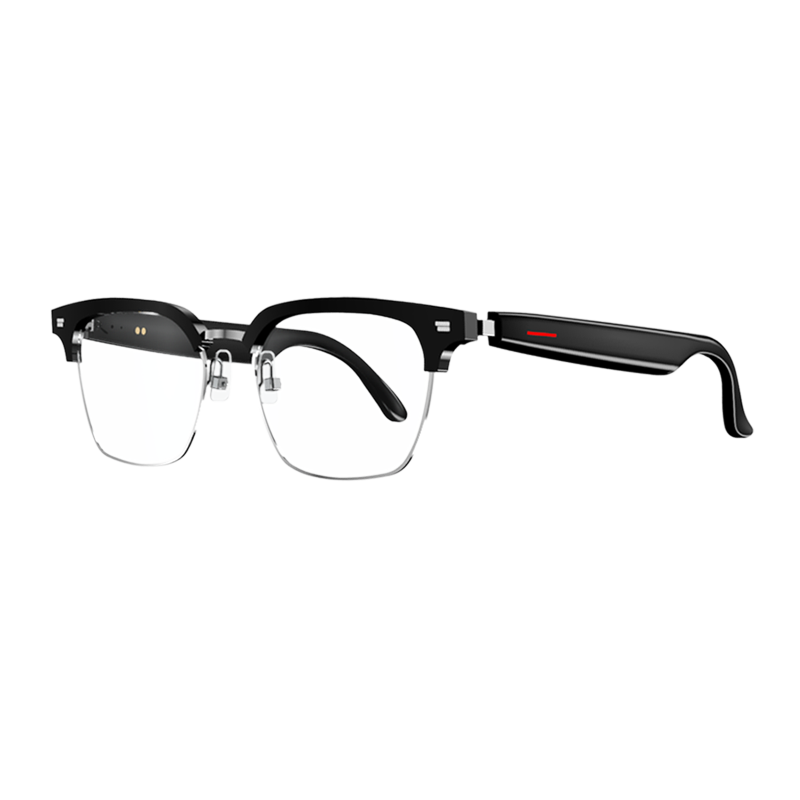
The modern market for smart glasses with prescription lenses has matured significantly, offering solutions that accommodate various refractive errors while delivering practical smart features such as Bluetooth connectivity, audio capabilities, and touch controls. Your selection process should begin with a thorough understanding of your prescription requirements, followed by an assessment of which smart functionalities align with your professional and personal routines. Whether you need these glasses primarily for vision correction with occasional smart features, or you require robust technological capabilities alongside precise optical performance, the framework for making an informed choice remains anchored in understanding how different specifications and design elements impact real-world usability.
Understanding Your Prescription Requirements and Optical Compatibility
Analyzing Your Current Prescription Parameters
Before exploring smart glasses with prescription lenses, you must obtain an up-to-date eye examination and prescription from a qualified optometrist or ophthalmologist. Your prescription includes specific measurements such as sphere power for nearsightedness or farsightedness, cylinder and axis values for astigmatism correction, and potentially add power for progressive or bifocal lenses. These numerical values determine which smart glasses frames can accommodate your optical needs, as not all smart eyewear platforms support the full range of prescription strengths or lens types. Understanding these parameters helps you filter your options to devices that can actually deliver the vision correction you require.
The sphere power range is particularly important when evaluating smart glasses with prescription lenses, as stronger prescriptions may require thicker lenses that affect weight distribution and overall comfort. Many smart glasses manufacturers specify maximum prescription ranges they can accommodate, typically ranging from negative six to positive four diopters for sphere correction. If your prescription falls outside these ranges, you may need to seek specialized providers or custom solutions. Additionally, high astigmatism corrections exceeding two diopters may present fitting challenges that require consultation with both the eyewear provider and your eye care professional to ensure optical accuracy.
Evaluating Lens Material and Optical Quality Standards
The lens material used in smart glasses with prescription lenses directly impacts clarity, durability, weight, and scratch resistance. High-index plastic materials offer thinner profiles for stronger prescriptions, reducing the bulk and weight that could compromise comfort during all-day wear. Polycarbonate lenses provide excellent impact resistance, making them suitable for active lifestyles, while trivex materials offer similar protection with slightly better optical clarity. Understanding these material properties helps you select lenses that balance optical performance with practical durability requirements for daily use scenarios.
Optical quality extends beyond basic prescription accuracy to include considerations such as chromatic aberration, peripheral distortion, and digital eye strain reduction. Premium smart glasses with prescription lenses should incorporate anti-reflective coatings that minimize glare from both external light sources and internal electronic displays or indicators. Blue light filtering capabilities have become increasingly relevant for individuals who spend significant time viewing digital screens, though you should verify that such coatings do not interfere with the smart features or display elements integrated into the eyewear. The combination of appropriate lens material, prescription accuracy, and protective coatings establishes the foundation for comfortable and effective daily wear.
Assessing Smart Features and Their Practical Application
Identifying Essential Versus Optional Technological Functions
When choosing smart glasses with prescription lenses for daily wear, you must distinguish between core functionalities that enhance your routine and supplementary features that may add unnecessary complexity or cost. Essential features typically include Bluetooth connectivity for hands-free calling, touch or voice controls for managing functions without removing the glasses, and sufficient battery life to support your typical daily schedule. These baseline capabilities ensure the smart aspect of your eyewear delivers tangible convenience without requiring constant attention or frequent recharging that disrupts your workflow.
Optional features such as integrated cameras, advanced sensors, augmented reality displays, or fitness tracking capabilities should be evaluated based on your specific use cases and privacy considerations. While these advanced functions can provide significant value in certain professional or recreational contexts, they also increase device complexity, power consumption, and potential security concerns. For daily wear applications, simpler feature sets often deliver better reliability and user experience compared to feature-rich devices that attempt to incorporate every possible technological capability. Prioritizing features that directly support your most frequent activities ensures your smart glasses with prescription lenses remain practical tools rather than technological novelties.
Evaluating Audio Quality and Call Management Capabilities
Audio performance represents a critical consideration for smart glasses with prescription lenses intended for daily wear, particularly if you plan to use them for phone calls, media consumption, or voice assistant interactions. Open-ear audio designs that direct sound toward your ear canals without blocking ambient noise offer situational awareness advantages for safety and social interaction, though they may compromise privacy in quiet environments. Bone conduction technology provides an alternative approach that leaves your ear canals completely open, though sound quality typically falls short of direct speaker designs for music listening or detailed audio content.
Microphone placement and noise cancellation technology determine call quality during conversations, especially in challenging acoustic environments such as busy streets, public transportation, or windy outdoor conditions. Multiple microphone arrays with beamforming capabilities help isolate your voice while suppressing background noise, ensuring clear communication for both professional calls and personal conversations. Testing audio performance in environments that match your typical use scenarios provides the most reliable assessment of whether a particular smart glasses model will meet your communication needs. Remember that audio quality can significantly impact whether you actually use the smart features regularly or revert to using your smartphone for these functions.
Prioritizing Comfort and Ergonomics for Extended Wear
Analyzing Frame Design and Weight Distribution
Comfort during all-day wear depends heavily on frame design, weight distribution, and how the smart glasses with prescription lenses balance electronic components with optical elements. The integration of batteries, speakers, microphones, and control circuits inevitably adds weight compared to conventional prescription glasses, making ergonomic design crucial for preventing pressure points, headaches, or ear discomfort during extended use. Well-engineered smart glasses distribute weight evenly across the nose bridge and temple arms, with adjustable nose pads and flexible temple tips that accommodate different head shapes and sizes.
Total weight typically ranges from thirty to fifty grams for smart glasses with prescription lenses, with lighter models generally providing better comfort for continuous wear. However, weight distribution matters more than absolute weight, as poorly balanced glasses can feel heavier and cause discomfort even if their actual mass falls within acceptable ranges. Frame materials such as lightweight titanium alloys, carbon fiber composites, or advanced polymers help minimize weight while maintaining structural integrity. Before committing to a purchase, evaluate whether the frame design accommodates your facial structure without requiring constant adjustment, as even minor fit issues become significant irritants over the course of a full day.
Considering Adjustability and Customization Options
Customization capabilities determine how well smart glasses with prescription lenses can be tailored to your specific anatomical features and wearing preferences. Adjustable nose pads allow fine-tuning of the vertical position and angle, ensuring the optical centers of your prescription lenses align correctly with your pupils for optimal vision. Temple arm length and curvature adjustments accommodate different head widths and ear positions, preventing the glasses from sliding down your nose or creating pressure points behind your ears. Some advanced models offer interchangeable components that allow you to modify fit parameters without professional assistance.
Professional fitting services provided by optical retailers or specialized smart eyewear providers can significantly enhance comfort and performance. These services typically include precise measurements of pupillary distance, vertex distance, and pantoscopic tilt, all of which affect how accurately your prescription lenses correct your vision when integrated into smart frames. If you have specific comfort requirements due to sensitive skin, previous eyewear fit issues, or asymmetrical facial features, working with experienced fitters ensures your smart glasses with prescription lenses receive appropriate adjustments before you begin daily wear. The investment in proper fitting often prevents frustration and abandonment of otherwise functional devices.
Evaluating Battery Life and Charging Convenience
Understanding Power Consumption Patterns
Battery performance directly impacts the practicality of smart glasses with prescription lenses for daily wear applications. Different usage patterns produce dramatically different power consumption rates, with active Bluetooth calling and audio streaming draining batteries much faster than standby mode with occasional notifications. Realistic battery life expectations require understanding your typical usage pattern, including how many hours per day you wear the glasses, how frequently you use active features versus passive wear, and whether you can access charging opportunities during your daily routine.
Most smart glasses with prescription lenses provide between four and eight hours of active use or up to two days of light usage with frequent standby periods. If your daily routine includes extended periods of active feature use, such as numerous phone calls or continuous audio streaming, you should target devices at the upper end of battery performance specifications. Some models incorporate quick-charging capabilities that provide several hours of use from brief charging sessions, offering flexibility for users who can access power during lunch breaks or commute transitions. Understanding these charging patterns helps you select devices that align with your access to charging infrastructure throughout your typical day.
Assessing Charging Methods and Maintenance Requirements
The charging interface and method affect daily convenience and long-term durability of smart glasses with prescription lenses. Proprietary charging cables or docks require you to carry specific accessories and may create compatibility issues if replacements become necessary. Universal charging solutions using standard USB-C connections offer greater flexibility and typically provide faster charging speeds. Wireless charging capabilities, while convenient, may add cost and weight to the glasses while potentially reducing charging efficiency compared to direct connection methods.
Charging case designs that protect your smart glasses with prescription lenses while simultaneously recharging them provide excellent convenience for users who remove their eyewear periodically throughout the day. These cases often incorporate additional battery capacity that extends total usage time across multiple days without requiring access to wall power. However, you must consider the additional bulk and weight of carrying a charging case compared to simply using a compact charging cable. Maintenance considerations include cleaning requirements for charging contacts, firmware update procedures, and battery longevity expectations, as rechargeable batteries typically degrade after several hundred charge cycles, potentially requiring professional replacement after two to three years of regular use.
Navigating Compatibility and Integration Factors
Ensuring Smartphone and Device Compatibility
Smart glasses with prescription lenses rely on seamless integration with your smartphone or other primary devices to deliver their full functionality. Bluetooth version compatibility, operating system requirements, and companion app availability determine whether specific smart glasses models will work reliably with your existing technology ecosystem. Most modern smart eyewear supports both iOS and Android platforms, though certain advanced features may work better or exclusively with one operating system. Verifying compatibility before purchase prevents frustration with connection issues, limited functionality, or inability to access important features through your preferred devices.
Companion applications provide interfaces for customizing settings, managing connections, updating firmware, and accessing usage analytics for your smart glasses with prescription lenses. The quality and reliability of these applications significantly impact user experience, as poorly designed software can complicate simple tasks or introduce connection stability problems. Reading user reviews specifically focused on app performance and developer responsiveness to issues helps assess whether a particular smart glasses platform maintains its software adequately. Additionally, consider whether the manufacturer demonstrates commitment to long-term software support, as abandoned platforms may lose functionality as smartphone operating systems evolve.
Considering Ecosystem Lock-In and Future Flexibility
Investment in smart glasses with prescription lenses represents a significant financial commitment that extends beyond the initial purchase price. Lens replacement costs for prescription updates, repair services for damaged components, and potential upgrade paths for improved technology all factor into total cost of ownership. Some manufacturers offer modular designs where optical inserts can be updated independently of the smart frame components, providing flexibility as your prescription changes or as you desire newer technological capabilities. This modularity can extend the useful life of your investment and reduce long-term costs compared to fully integrated designs that require complete replacement for any single component failure.
Proprietary ecosystems that lock you into specific service providers or upgrade paths may limit your flexibility and potentially increase costs over time. Open standards and widely available replacement components provide greater independence and typically lower maintenance costs. When evaluating smart glasses with prescription lenses for daily wear, consider not only the immediate capabilities but also the long-term sustainability of the platform, the manufacturer's track record for supporting previous products, and the availability of third-party service options. These factors collectively determine whether your smart glasses remain useful and economically viable beyond the initial purchase period.
FAQ
Can smart glasses with prescription lenses accommodate progressive or bifocal prescriptions?
Many modern smart glasses with prescription lenses can accommodate progressive or bifocal prescriptions, though this capability varies by manufacturer and frame design. The key limitation involves the vertical height of the lens area, as progressive lenses require sufficient space to incorporate the gradual power transition between distance and near vision zones. Standard progressive designs typically need at least twenty-eight millimeters of vertical lens height, while short-corridor progressives can function with smaller frames. You should consult with both your eye care professional and the smart glasses provider to verify that your specific progressive prescription can be properly fitted into the frame design you are considering, as improper fitting of multifocal lenses can result in reduced effective viewing areas and visual discomfort.
How often should I update the prescription lenses in my smart glasses?
You should update the prescription lenses in your smart glasses with prescription lenses whenever your vision correction needs change, typically following the same schedule you would use for conventional eyewear. Most eye care professionals recommend comprehensive eye examinations annually for adults or more frequently if you experience vision changes, eye health concerns, or specific conditions requiring closer monitoring. If your prescription changes significantly during an examination, updating your lenses ensures optimal visual clarity and prevents eye strain or headaches from wearing outdated correction. Some smart glasses platforms offer easy lens replacement services that allow you to update only the optical component without replacing the entire device, making it more practical and economical to maintain current prescriptions throughout the technological lifespan of your smart frames.
Are smart glasses with prescription lenses suitable for driving or operating machinery?
The suitability of smart glasses with prescription lenses for driving or operating machinery depends on the specific features of the device and applicable safety regulations in your jurisdiction. If the smart glasses function purely as prescription eyewear with audio-only features that do not create visual distractions, they typically present no greater safety concern than conventional prescription glasses with Bluetooth earpieces. However, smart glasses incorporating visual displays, notification indicators, or camera viewfinders that could divert attention from driving tasks may be prohibited or inadvisable during vehicle operation. You should review local traffic laws regarding electronic devices and wearable technology, disable distracting features before driving, and prioritize models designed specifically for safe use during attention-critical activities if driving represents a significant portion of your daily wear time.
What warranty and support services should I expect for smart glasses with prescription lenses?
Comprehensive warranty coverage for smart glasses with prescription lenses should address both the electronic components and the optical elements, though these may be covered under separate warranty terms. Standard warranties typically provide one to two years of coverage for manufacturing defects, electronic component failures, and frame integrity issues, while prescription lens warranties may be shorter and exclude damage from accidents or improper care. You should carefully review warranty terms to understand what types of damage are covered, whether the warranty includes both parts and labor for repairs, and what process you must follow to obtain service. Premium manufacturers often provide extended warranty options, accident protection plans, or lens replacement guarantees that can significantly reduce long-term ownership costs and risks associated with damage to these relatively expensive devices.
Table of Contents
- Understanding Your Prescription Requirements and Optical Compatibility
- Assessing Smart Features and Their Practical Application
- Prioritizing Comfort and Ergonomics for Extended Wear
- Evaluating Battery Life and Charging Convenience
- Navigating Compatibility and Integration Factors
-
FAQ
- Can smart glasses with prescription lenses accommodate progressive or bifocal prescriptions?
- How often should I update the prescription lenses in my smart glasses?
- Are smart glasses with prescription lenses suitable for driving or operating machinery?
- What warranty and support services should I expect for smart glasses with prescription lenses?