 EN

A smart ring may help identify overnight patterns that warrant a closer look, but it cannot diagnose sleep apnea or another breathing disorder. Its role in sleep breathing screening is best understood as an early signal: oxygen dip detection and related trends can prompt a conversation with a clinician, while medical validation limits determine how much confidence to place in those signals.
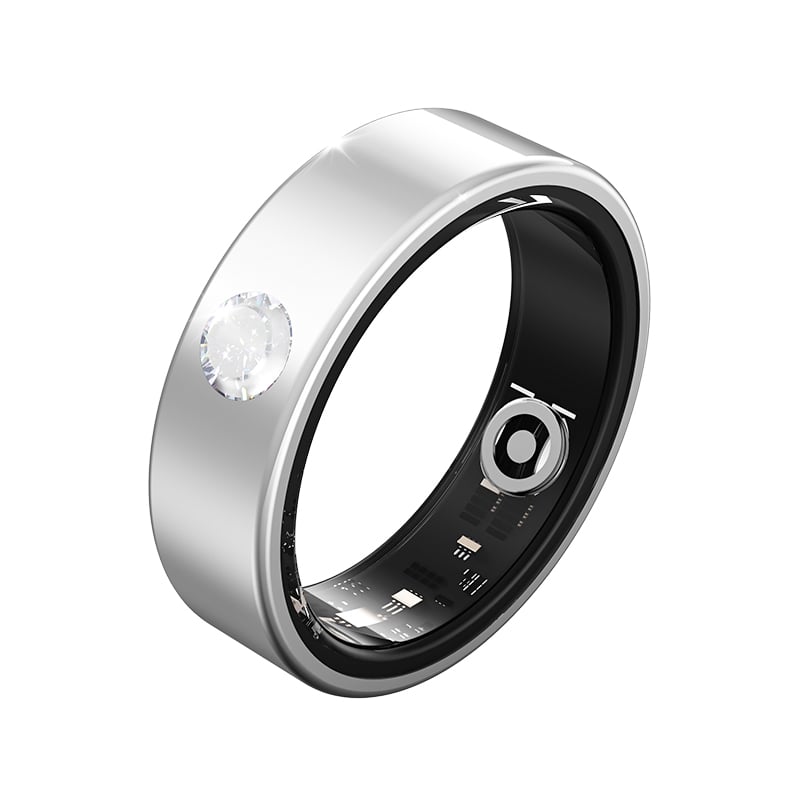
The distinction matters for anyone evaluating a wearable for personal wellness or workplace health education. A ring can collect useful overnight data with little disruption, yet sleep breathing screening is not equivalent to a clinical sleep study. Understanding oxygen dip detection, potential sources of error, and medical validation limits helps people use the information responsibly rather than treating a graph as a diagnosis.
What overnight signals can indicate
Oxygen patterns are clues, not diagnoses
Many wearables estimate blood oxygen saturation using optical sensors that shine light into tissue and measure returning light. During sleep breathing screening, a device may look for repeated changes or drops from a person’s usual overnight pattern. Oxygen dip detection can therefore highlight a trend that merits attention, but a single low reading does not establish why it happened or whether a breathing disorder is present.
A clinician interprets oxygen alongside symptoms, medical history, and measurements such as airflow, breathing effort, heart rhythm, and sleep stage. A smart ring generally does not capture the complete set of signals needed to distinguish obstructive events, central events, sensor disturbance, or normal variation. For that reason, sleep breathing screening from a consumer device should be framed as observation, not a substitute for diagnostic testing.
Patterns gain meaning from context
Repeated oxygen dip detection across several nights may be more informative than an isolated event, especially when the pattern occurs with loud snoring, witnessed pauses, morning headaches, or persistent daytime sleepiness. Those symptoms still need professional assessment; the wearable cannot confirm that they share one cause. Medical validation limits include uncertainty about whether the device’s readings and alert thresholds perform consistently across different users and sleep conditions.
The value of sleep breathing screening is often practical: it can help a person notice a pattern they might otherwise miss and prepare clearer questions for a healthcare visit. Record the dates, symptoms, and relevant circumstances rather than relying on one nightly score. Oxygen dip detection becomes more useful when considered with that context, while medical validation limits remain central to interpreting what the pattern means.
Why ring readings can differ from clinical measurements
Fit, movement, and circulation affect the signal
Optical sensing depends on stable contact and adequate circulation at the measurement site. A loose fit, hand movement, cold fingers, pressure on the hand, or changes in peripheral blood flow can weaken or distort the signal. These factors can create apparent oxygen dip detection events or hide real changes, complicating sleep breathing screening even when the ring records continuously.
Skin characteristics, nail products, device placement, and individual physiology may also affect optical measurements. Device algorithms may smooth noisy data or reject readings, but users usually cannot inspect every processing decision. Medical validation limits include whether the device has been tested against suitable reference equipment in representative populations, under conditions similar to everyday use.
Different devices answer different questions
A wellness ring is designed to track trends, not necessarily to produce measurements suitable for clinical decisions. Its oxygen dip detection may use sampling intervals, averaging, and alert rules that differ from those used in a medical monitor. As a result, two devices can report different values without either display revealing the full measurement uncertainty.
Clinical sleep testing can assess several connected signals, including airflow and breathing effort, and may identify events that do not produce a substantial oxygen drop. A ring focused on oxygen patterns can miss those events. This is an important boundary for sleep breathing screening: the absence of flagged drops does not rule out a disorder, and the presence of drops does not prove one. Medical validation limits should shape both conclusions.
How to use results and understand validation
Turn repeated alerts into a useful next step
If oxygen dip detection repeatedly shows unusual patterns, save the trend and discuss it with a qualified healthcare professional, particularly when symptoms or known risk factors are present. Explain how the ring fits, whether readings were interrupted, and whether the pattern appeared on multiple nights. This makes sleep breathing screening a starting point for a structured conversation rather than a self-diagnosis.
Ask what additional assessment is appropriate and whether an at-home test or laboratory sleep study is suitable. A clinician can decide based on symptoms and health history, not the ring graph alone. Medical validation limits also mean a normal-looking result should not delay care when symptoms are concerning or worsening.
Evaluate evidence before relying on an alert
Validation is not a single label. Relevant evidence includes comparison with an accepted reference method, clearly described participant groups, performance across different levels of oxygen saturation, and independent replication. For sleep breathing screening, it also matters whether the device was assessed for detecting a defined clinical condition or merely for measuring oxygen trends. Those are different claims.
Consumers and occupational health teams should check what the product actually measures, how often it samples, and what its warnings are intended to communicate. Ask whether oxygen dip detection has been evaluated in the population using the device and whether the results have been reviewed by clinicians. Transparent medical validation limits help prevent wellness information from being mistaken for a cleared diagnostic function.
In short, a smart ring can support awareness and help identify patterns worth discussing, but its readings are not a diagnosis. Treat repeated changes as a reason to seek appropriate guidance, not proof of disease; treat an absence of changes as no guarantee of healthy breathing. That balanced approach preserves the practical value of sleep breathing screening while respecting medical validation limits.
FAQ
Can a smart ring diagnose sleep apnea?
No. Oxygen dip detection may show an overnight pattern, but diagnosis requires clinical assessment and, when indicated, appropriate sleep testing. A smart ring can support sleep breathing screening, not replace it.
Does a normal oxygen trend rule out a breathing problem?
No. Some breathing events may not cause a clear oxygen drop, and sensor limitations can affect readings. Medical validation limits mean a normal trend should not override persistent symptoms or professional advice.
What should I do after repeated oxygen alerts?
Save several nights of readings, note symptoms and circumstances, and discuss the pattern with a healthcare professional. Oxygen dip detection is a prompt for evaluation, not a standalone conclusion about sleep breathing.