 EN

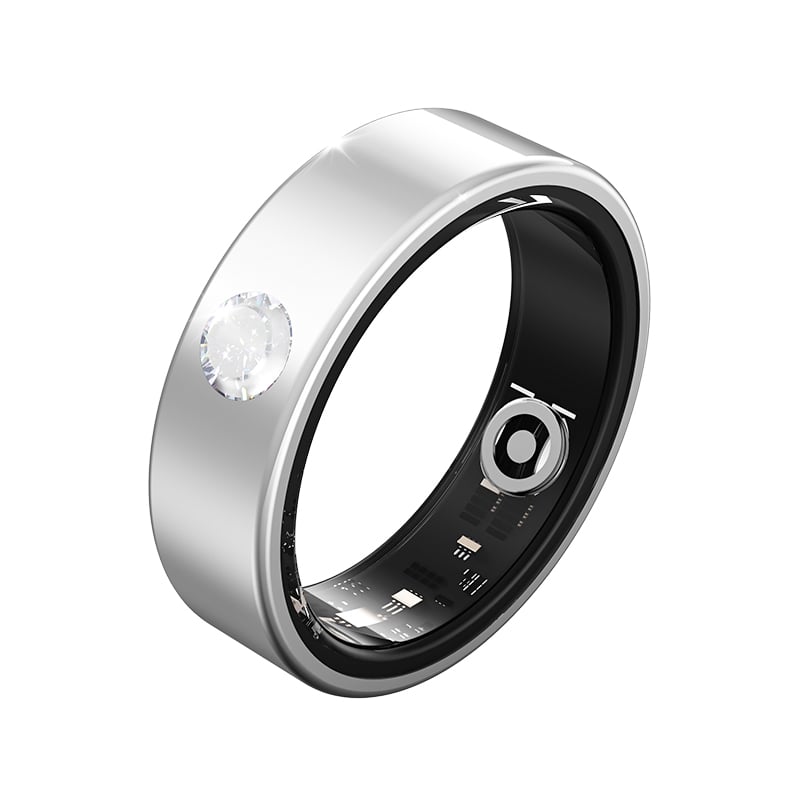
A smart ring estimates walking activity from movement signals, so its daily step tracking depends on more than simply detecting motion. Motion sensor calibration helps the device distinguish steps from other hand movements, while step count accuracy reflects how well that interpretation matches real activity. Understanding the relationship helps users read totals realistically and helps product teams evaluate tracking behavior.
The practical answer is that calibration shapes the movement patterns a ring recognizes, and recognition quality shapes the displayed count. Daily step tracking is therefore an estimate rather than a direct tally of every footfall. Motion sensor calibration and step count accuracy matter most when users compare trends, assess a routine, or interpret changes between different settings and activities.
How Calibration Turns Movement Into Steps
Signals, patterns, and recognition thresholds
A ring contains motion sensors that register acceleration and changes in orientation. Its software analyzes those signals for repeated patterns associated with walking, then updates daily step tracking when a pattern meets its detection rules. Motion sensor calibration helps establish useful thresholds, while step count accuracy depends on whether those thresholds separate walking from gestures, typing, and other ordinary hand activity.
This distinction is important because a hand can move without the wearer taking a step. Reaching for a tool or gesturing during a conversation may create a brief signal, but it may not resemble a sustained walking rhythm. Effective motion sensor calibration limits these false detections; stronger step count accuracy follows when the algorithm consistently identifies genuine movement without treating every arm swing as a step.
Fit and wearing conditions
A ring sits on a finger, where fit and orientation can affect the motion data available to its sensors. If it rotates, feels loose, or is worn on a different finger, the same activity can produce a somewhat different signal. Daily step tracking may consequently vary, even when the walking route has not changed. Motion sensor calibration and step count accuracy are best assessed under consistent wearing conditions.
For a useful baseline, wear the device as intended and avoid repeatedly changing fingers during a comparison period. The smart ring should feel secure without restricting comfort. A stable fit makes daily step tracking easier to interpret because the sensor receives more comparable movement signals, giving motion sensor calibration a consistent basis and supporting step count accuracy over time.
Why Step Totals Differ From Reality
Activity type changes the signal
Walking with a relaxed arm swing may produce a clear rhythmic pattern, while pushing a cart, carrying a box, or holding a phone can reduce hand movement. In these situations, daily step tracking may undercount despite steady walking. Motion sensor calibration cannot make every activity generate an identical signal, and step count accuracy can differ by task because the ring observes movement at the hand rather than directly measuring each footfall.
Other routines create the opposite challenge. Repetitive hand work, vigorous gestures, or travel vibrations can resemble portions of a walking pattern. A well-tuned system uses duration, rhythm, and signal context to reduce mistaken counts, but no single threshold fits every person and task. Users evaluating daily step tracking should consider what they were doing, while motion sensor calibration and step count accuracy should be judged across varied but ordinary activities.
Algorithms and personal variation
Detection rules translate raw sensor readings into a count, and those rules involve trade-offs. A sensitive setting may recognize more subtle walking signals but risk counting unrelated movement; a conservative setting may filter noise yet miss restrained arm motion. This balance affects daily step tracking directly. Motion sensor calibration defines part of the decision context, while step count accuracy depends on how reliably the algorithm performs across users and environments.
Stride, gait, walking pace, and natural hand movement differ from person to person. That variation means two wearers can receive different results from the same route without either device being obviously faulty. Rather than assuming a universal count, compare daily step tracking across multiple days and similar routines. Review motion sensor calibration behavior alongside step count accuracy, especially if a change in fit, hand use, or software coincides with a changed total.
How to Interpret and Improve Daily Tracking
Use consistent checks instead of isolated totals
A short, repeatable walk can help assess whether the count responds sensibly to activity. Note the displayed value before and after a known route, then repeat the check under similar conditions rather than drawing conclusions from one outing. Daily step tracking is more informative as a trend than as a perfect record. Motion sensor calibration and step count accuracy become easier to assess when route, pace, and wearing position stay broadly consistent.
Compare patterns, not just a single number. If totals rise on active days and fall on quieter days, the device may be useful for routine awareness even if its count differs from another measurement method. A stable gap does not automatically invalidate daily step tracking, since devices can use different sensor positions and algorithms. Consider whether motion sensor calibration remains consistent and whether step count accuracy changes with specific activities.
Set realistic expectations for decisions
For everyday habit tracking, directional feedback can support awareness and routine building. It is less suitable to treat every displayed step as a verified footfall or to use small daily differences as a definitive measure of health change. Daily step tracking should be interpreted alongside context, including work tasks and exercise. Motion sensor calibration influences the signal interpretation, and step count accuracy indicates how closely the estimate reflects actual walking.
Product teams can make tracking more useful by testing across realistic conditions, including normal walking, carrying objects, desk work, and changes in pace. They should explain how fit and activity affect the estimate rather than presenting a count as exact. Clear guidance helps users understand daily step tracking and sensor limitations. Ongoing evaluation of motion sensor calibration and step count accuracy can reveal where recognition improves and where uncertainty remains.
FAQ
Why can my ring count differ from another device?
Devices measure movement from different body positions and may apply different recognition rules. A ring tracks hand motion, so daily step tracking can differ from a wrist or waist-based estimate, particularly when carrying items or walking with limited arm swing. Compare repeated trends under similar conditions rather than expecting identical totals.
Can calibration prevent every missed or extra step?
No. Motion sensor calibration can help the system distinguish common walking patterns from unrelated movement, but hand activity, fit, and pace still affect the signal. Calibration is a way to improve interpretation, not a guarantee that every step will be detected or that every false signal can be removed.
What is the best way to judge whether the count is useful?
Look for consistent responses across comparable days and activities, and note situations that repeatedly produce unusual readings. Step count accuracy is most meaningful in relation to your use case: a dependable trend may support habit awareness, while precise footfall accounting requires a more controlled measurement approach.