 EN


Reliable heart rate monitoring from a smart ring depends on more than the sensor itself. Optical sensor placement determines how well light reaches blood vessels, while pulse reading consistency determines whether the device can turn changing signals into useful trends. Understanding both factors helps buyers and users judge readings realistically, especially during movement, sleep, and routine daily activity.
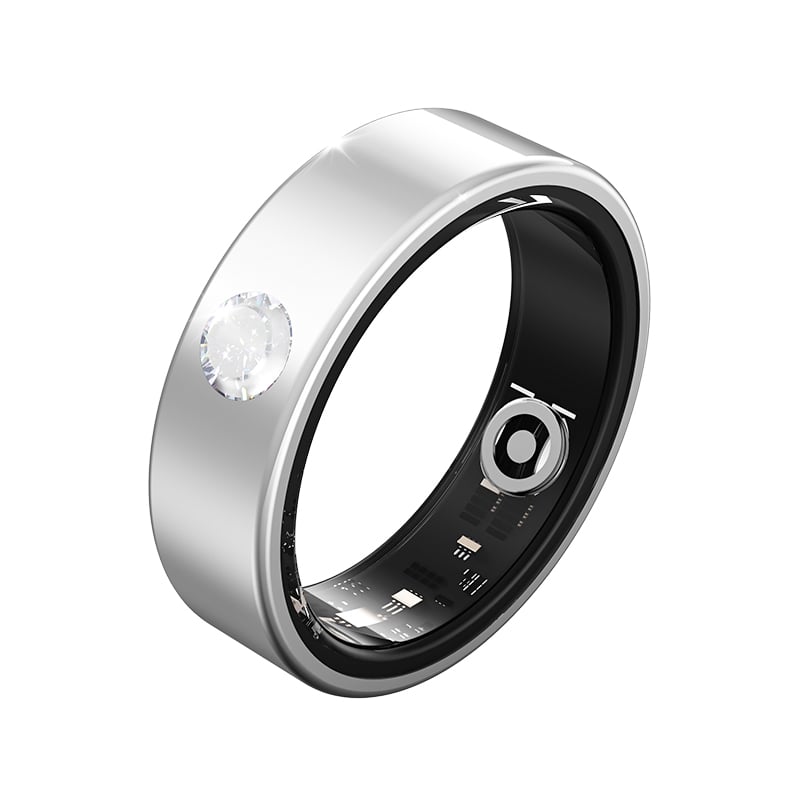
A ring records optical signals at the finger, where contact, circulation, and motion can change from moment to moment. Pulse reading consistency is therefore not simply a matter of displaying the same number repeatedly; it reflects how steadily the device captures and interprets a pulse under different conditions. Placement and fit provide the starting point for understanding that consistency.
How optical placement shapes the signal
Contact connects light sensing to circulation
Optical sensors generally use light to detect changes associated with blood volume beneath the skin. For heart rate monitoring, the sensor needs a stable path through tissue and a close enough fit to limit gaps between the ring and finger. Optical sensor placement matters because a shifted sensor may receive a weaker or less stable signal, even when the wearer is resting.
A ring that rotates can move its sensing area away from the best contact point. Optical sensor placement should therefore be considered together with ring size, finger shape, and how the ring sits during ordinary hand use. A snug fit can support a clearer signal, but excessive tightness may be uncomfortable and is not a sensible substitute for appropriate sizing.
Fit and hand conditions change over time
Finger circumference can vary with temperature, activity, and time of day. That variation may change contact pressure and affect pulse reading consistency, particularly if a ring is already loose or tends to turn. Heart rate monitoring is more useful when users recognize that a change in fit can alter the signal before it indicates a meaningful change in their physiology.
For practical checks, note whether the ring stays in place, whether its sensing surface remains against the finger, and whether the fit feels stable without pinching. Optical sensor placement is not a fixed laboratory condition during daily wear, so users should assess readings alongside comfort and movement. Pulse reading consistency can also be judged by comparing similar periods rather than expecting every measurement to match.
Why pulse readings vary during wear
Movement challenges optical interpretation
Walking, gripping tools, typing, and exercise can all introduce movement near the sensor. These actions may change pressure on the ring or add optical noise, making it harder to separate a pulse signal from motion. Heart rate monitoring during activity can consequently be less stable than a quiet reading, and pulse reading consistency depends partly on how well the device handles those changing conditions.
Optical sensor placement remains relevant while hands move, because repeated shifts can interrupt contact even when the ring size seems correct at rest. A device may use signal processing to reduce motion effects, but no interpretation method can make every movement identical. When a reading jumps during a brief task, consider the activity and the fit before treating it as a sustained change.
Signal processing benefits from repeatable conditions
A wearable can sample a signal, filter irregular fluctuations, and estimate a pulse rate from the remaining pattern. Heart rate monitoring is more interpretable when the incoming signal is reasonably clear and when readings recur under comparable conditions. Pulse reading consistency is therefore influenced both by the physical signal and by how the device processes it, not just by the sensor hardware.
To assess a questionable value, pause when practical, keep the hand relaxed, and allow the ring to settle before comparing another reading. Repeating a measurement in a similar posture can help distinguish a short-lived artifact from a recurring pattern. If pulse reading consistency improves at rest, motion may have contributed; if it does not, check fit and contact before drawing conclusions about heart rate monitoring.
How to interpret readings in real use
Compare like with like
A useful review compares readings from similar contexts, such as quiet sitting with quiet sitting or a consistent sleep period with another sleep period. Heart rate monitoring over time can reveal patterns more clearly than focusing on one isolated value. Optical sensor placement and fit should remain reasonably consistent during those comparisons, since a different ring position can complicate interpretation.
Users can note whether the ring was moving, whether it felt loose, and whether readings were captured during activity or rest. This context helps explain pulse reading consistency without assuming that every fluctuation is a device problem. A smart ring can support personal trend awareness, but its output is not a diagnosis or a replacement for clinical assessment.
Use fit checks and sensible follow-up
If readings seem erratic, first confirm that the ring fits comfortably and has not rotated away from the skin contact area. Review whether optical sensor placement is stable, then compare measurements under calm, repeatable conditions. Pulse reading consistency may improve when avoidable movement and loose contact are reduced, although individual anatomy and circulation can still affect what the sensor captures.
Persistent concerns deserve more than repeated checking of a wearable display. Heart rate monitoring from a consumer device can provide context, but symptoms or readings that worry the wearer should be discussed with a qualified health professional. The most responsible interpretation combines patterns, activity context, fit observations, and appropriate clinical advice rather than relying on a single ring measurement.
FAQ
Can ring position change a heart rate reading?
Yes. A rotated or loose ring can disrupt skin contact and affect optical sensor placement, which may make heart rate monitoring less stable. Check comfortable fit and compare readings under similar conditions; one unusual value alone does not establish a health change.
Why are readings less consistent during activity?
Hand movement can add noise or alter contact while the sensor is detecting pulse changes. Pulse reading consistency may vary during tasks or exercise, even when the ring is correctly sized. Resting briefly and comparing like conditions can help clarify whether movement influenced the result.
Should repeated readings always match?
No. Normal variation, movement, fit, and signal processing can produce different estimates. Heart rate monitoring is generally more informative as a pattern than as a demand for identical values. If a concern persists or accompanies symptoms, seek guidance from a healthcare professional instead of relying on wearable data alone.