 EN

A smart ring can support cycle tracking by recording overnight temperature patterns and other wellness signals over time. It does not directly measure ovulation or establish fertility, so its value depends on consistent wear, clear explanations of the data, and careful interpretation alongside personal cycle information.
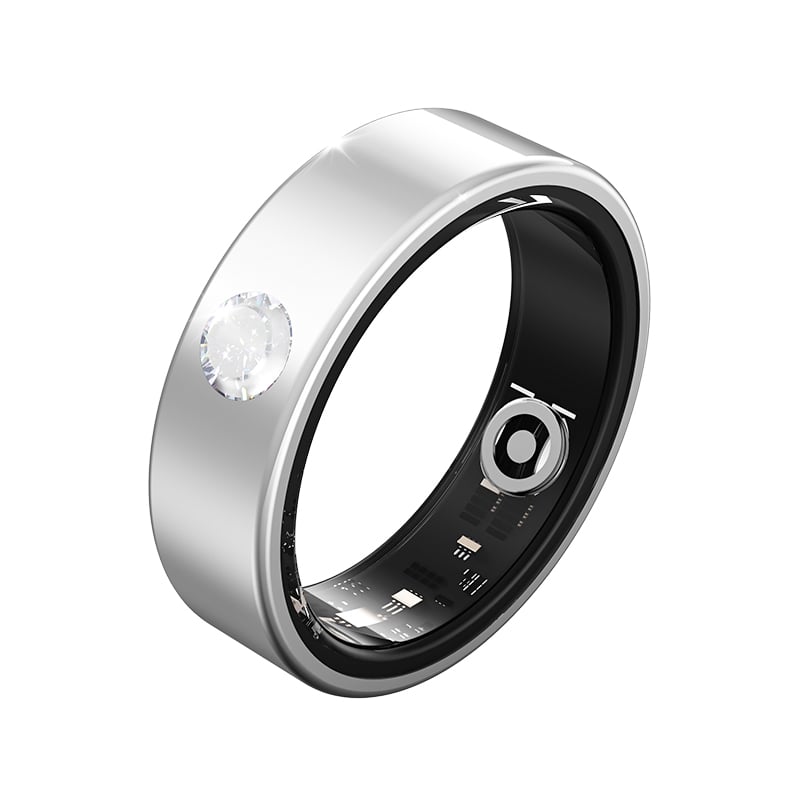
Temperature trend logging can give context to changing cycle patterns, while fertility app compatibility determines whether that information can move into another tool. The connection is not automatic: data formats, permissions, and each app’s interpretation rules matter. Understanding those limits helps users and health teams decide what the readings can reasonably support.
How the ring gathers cycle-related signals
Overnight sensing and temperature patterns
A ring worn during sleep can collect repeated skin-temperature readings and create a baseline for comparison. Temperature trend logging is about changes across nights, not a single diagnostic temperature. For cycle tracking, a sustained shift may offer useful context, but it should be viewed with cycle dates and other observations rather than as proof of a specific event.
The ring’s fit, wear time, and sensor contact affect the consistency of readings. If it is removed often or worn loosely, the record may contain gaps that make temperature trend logging harder to interpret. A smart ring may also record activity or sleep signals, but those measurements do not replace direct reproductive-health assessment.
Turning measurements into useful context
Software typically compares new readings with a person’s own recent baseline, then displays a trend rather than a universal threshold. That distinction matters because temperature patterns vary between individuals. Cycle tracking works best when the wearer enters period dates accurately and reviews the trend across multiple cycles, instead of treating one unusual night as a meaningful change.
Illness, disrupted sleep, travel, alcohol, and changes in room conditions can influence readings. Temperature trend logging may reflect these influences as well as ordinary cycle variation. A useful interface should show missing or potentially disrupted data and avoid implying certainty where the record is incomplete. Users should consider those caveats before drawing conclusions from a chart.
What fertility app compatibility involves
Ways data can move between tools
Fertility app compatibility depends on whether the ring’s companion software can share data through an authorized health platform, an integration, or a file export. The exact route varies by device, phone, operating system, and app version. Before relying on cycle tracking across tools, check which fields transfer, whether updates sync automatically, and whether setup requires permission changes.
A connection may transfer daily measurements but not the ring’s calculated summaries, or it may share summaries without the underlying readings. Temperature trend logging therefore might appear in a fertility app as a value, a chart, or no data at all. Review the destination app’s supported inputs and confirm that imported information is labeled clearly.
Fertility app compatibility is also a question of meaning, not just connectivity. One platform may treat a temperature value as a manual observation, while another may use it in a model. The linked smart ring should be evaluated through its documented sharing options, not an assumption that every app reads its data identically.
Privacy, permissions, and data quality
Before enabling a connection, check what information is shared, where it is stored, and how to revoke access. Fertility app compatibility can involve sensitive cycle and wellness records, so users should review both services’ privacy settings. A secure transfer does not guarantee that the receiving app uses the data in the way the wearer expects.
Imported records can also be delayed, duplicated, or incomplete. Compare a few entries in both interfaces before relying on the connection. If temperature trend logging is missing or represented differently, check sync permissions and the app’s accepted units. Keeping a separate note of important cycle dates can help identify a gap without treating the ring’s estimate as a clinical result.
Using the combined data responsibly
A practical routine for reviewing trends
Wear the ring consistently according to its instructions, check that it fits securely, and enter cycle dates promptly in the chosen app. This routine makes cycle tracking easier to review because measurements and calendar records share a usable timeline. When the apps connect, confirm that transferred readings appear on the correct dates rather than assuming synchronization has occurred.
Review patterns over time and annotate unusual conditions such as fever, travel, or interrupted sleep. Temperature trend logging has more context when those events are noted beside the chart. If the ring or phone was offline, identify the missing period rather than filling it with guessed values. Consistent records are more useful than a seemingly complete chart built from assumptions.
Setting realistic expectations for fertility use
A wearable trend can inform awareness, but it cannot guarantee a fertile window, confirm pregnancy, or diagnose a reproductive condition. Cycle tracking based on ring readings is best treated as one input among several. Anyone using data to guide conception or avoid pregnancy should check whether the app is designed and validated for that purpose and follow its stated limitations.
If cycles are irregular, readings are persistently unclear, or a health concern arises, consult a qualified clinician rather than relying on a wearable interpretation. Temperature trend logging can help users describe patterns during that discussion, especially when dates and relevant disruptions are recorded. Bring the original chart when possible, since a summary may omit details important to interpretation.
FAQ
Can a smart ring identify ovulation?
A smart ring can record temperature patterns that may provide cycle tracking context, but it does not directly confirm ovulation. Temperature trend logging reflects a pattern that can have several influences. Treat it as supportive information, not a stand-alone result or a substitute for professional advice.
Will ring readings appear in every fertility app?
No. Fertility app compatibility depends on supported integrations, device settings, and the data fields each app accepts. Check the app’s documentation and test the connection. Even when cycle tracking data transfers, temperature trend logging may be displayed differently or omitted.
What should users check before connecting an app?
Review permissions, transfer frequency, privacy terms, and whether imported measurements are clearly identified. Fertility app compatibility does not mean that two tools interpret readings alike. Check cycle tracking entries against the original record and use temperature trend logging as context rather than a guaranteed fertility assessment.